

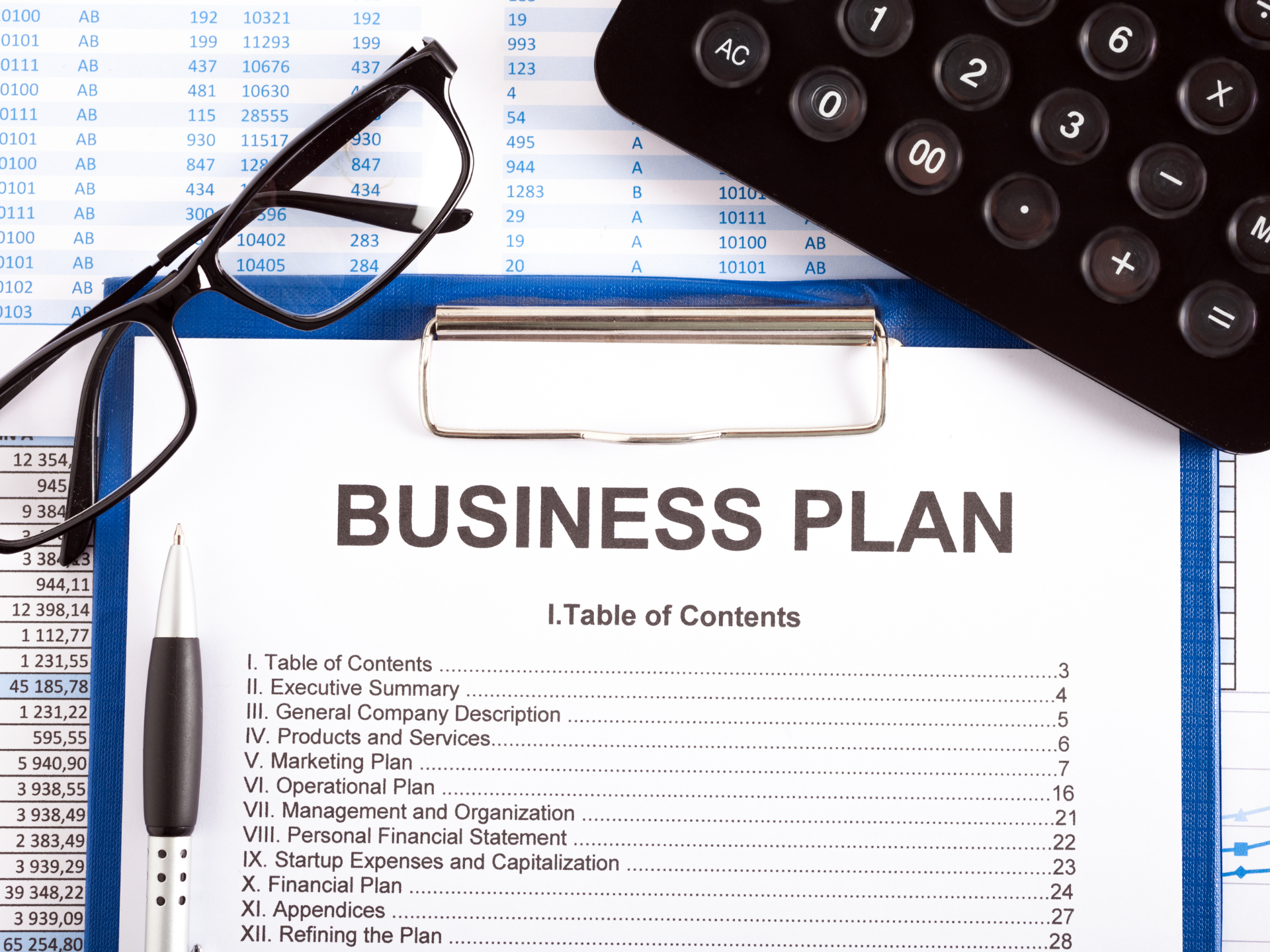
Plenty of people start a business without a plan. Some of them make it.
But most don't, and the reason usually isn't a bad idea or a lack of hustle. It's that nobody stopped long enough to ask the hard questions before the money was already spent.
A business plan is where you ask those questions on paper, when the answers are still cheap.
It turns a dream into a decision
An idea in your head feels bigger and simpler than it is. On paper, it has edges. Costs. Customers. A number you have to hit every month to keep the lights on.
That can be uncomfortable. It's also the moment your idea becomes real enough to act on. Writing it down forces you to move from "I've always wanted to" to "here is what it would take."
Some ideas don't survive that step. That's not a loss — that's a plan doing its job before it cost you your savings.
It shows you the money before you spend it
Most businesses don't close because they were unprofitable. They close because they ran out of cash at the wrong moment.
A plan makes you count what you'll spend before your first dollar comes in, what it costs every month to stay open, and how many customers you need to cover it. It shows you the slow season coming. It tells you how long you can go before the business has to pay for itself.
Knowing those numbers doesn't guarantee success. Not knowing them almost guarantees a surprise you can't afford.
It's how other people say yes
Sooner or later you'll need something from someone else. A loan. A lease. A supplier willing to extend terms. An investor. A partner who's deciding whether to bet their time on you.
Every one of those people is asking the same thing: does this person know what they're doing?
A clear plan answers that before you open your mouth. It says you've thought it through, you understand your market, and you know what the money does. Without one, you're asking people to trust a feeling.
It keeps you honest when things get loud
Once you're open, the noise starts. A customer wants something you don't sell. A competitor drops their prices. Someone suggests a new direction that sounds exciting on a Tuesday.
Your plan is the thing you check against. Does this move us toward what we said we were building, or away from it? Some of those opportunities are worth taking. But you'll make a better call when you have something to measure them against.
Without a plan, every new idea feels equally urgent. With one, you can tell the difference.
It gives you something to learn from
Here's the part most people miss. The real value of a plan isn't the prediction — it's the comparison.
You projected forty customers a month. You got twenty-five. Now you know something specific and useful about your pricing, your marketing, or your market. That's information you can act on.
Without a written plan, you have no baseline. Things are just going well or going badly, and you can't say why.
It's not permanent, and it shouldn't be
A business plan isn't a contract with your future self. Your first version will be wrong in places. That's expected.
The plan's job is to give you a starting position clear enough to correct. Revisit it quarterly. Update what changed. The document evolves as your business does — and businesses that last tend to be run by people who keep checking.
Start with support
You don't need to have it all figured out to begin. You need a place to start and people who'll ask you the right questions.
That's what the Achievers Entrepreneurial Hub is built for. AEH gives Erie entrepreneurs mentorship, instruction, workspace, and a network of people invested in seeing them succeed. Not a hand-out — a hand-up.
Cohort 5 begins September 15, 2026 and runs through May 26, 2027. Seats are limited and filling fast.
If you've been carrying an idea, don't carry it alone.
Community Cornerstone Project
930 Liberty Street, Erie, PA 16502
(814) 825-7102
infoaehub@gmail.com
communitycornerstoneproject.org/aeh
Shaping Erie's Future, One Success Story at a Time.